I put out a market update a couple of times a year, and every time I do, the first thing I tell people is that there are really two ways to read this valley. From 40,000 feet, the Vail Valley is one place with one trend line. On the ground, it is a string of distinct communities running down the Eagle River, each with its own buyers, its own price points, and its own story this year. Both views are true, and you need both to make a good decision. So that is how I have written this: the big picture first, then a walk down the valley, community by community.
A quick note on the numbers. The figures below run through the latest reliable data available as I write this in early July, which means spring closings plus the first of the Colorado Association of Realtors reporting that now reaches into May. The June editions from Slifer Smith & Frampton and the Colorado Association of Realtors are expected in mid-July, so May remains the latest complete month as I write this, and June and the heart of the summer selling season are still being tallied. Consider this a read on where the year stands at its midpoint, not a final word on the summer. I have sourced everything I cite, and I have tried hard not to dress up a soft number or scare anyone with a noisy one. This is the same read I would give you across my desk.
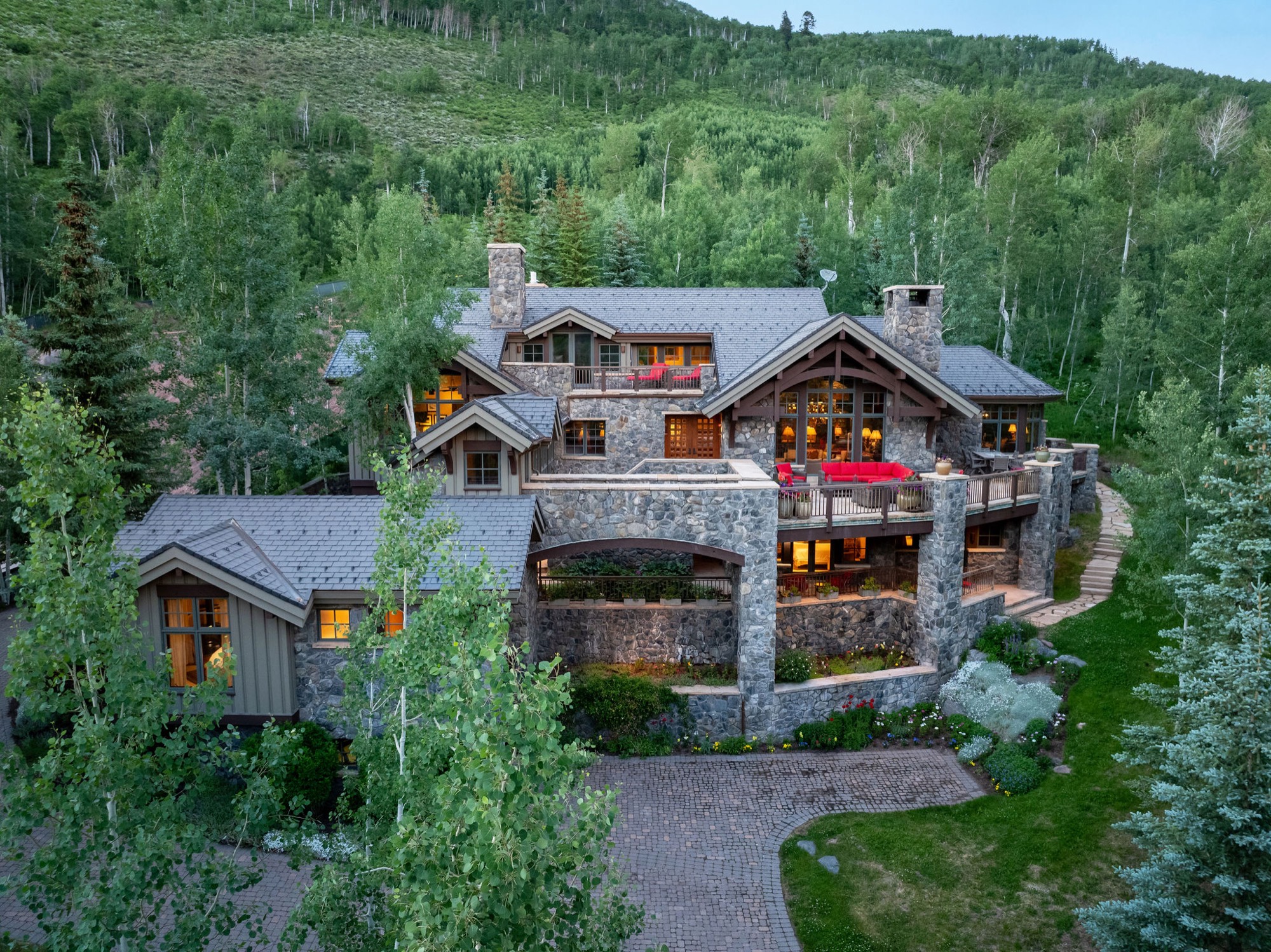
The 40,000-Foot View
Here is the honest big-picture summary at the midpoint of 2026: prices have eased back from their pandemic-era peak, sales activity has actually picked up, and there are more homes to choose from than there were a year ago.
As of the most recent county-wide reading, the median home sale in Eagle County has been running around $1.5 million, down roughly 17 percent year over year, per Redfin. Most of that drop is about mix rather than falling values: fewer of the very highest-end homes have closed so far this year, which drags the county-wide number down even as prices in a lot of communities have held closer to flat. In the town of Vail, the latest Colorado Association of Realtors figures show median prices down only modestly year over year, as reported by the Vail Daily. The gap between those two framings is itself a lesson: a county-wide median jumps around depending on what mix of homes happened to sell, which is exactly why the averages matter less than what is happening in your specific community and price band.
Step back further and the perspective changes again. High-country median prices are still up roughly 111 percent over the past five years, as the Colorado Sun recently laid out. So "down from the peak" and "historically very expensive" are both true at the same time. That is the tension every buyer and seller is living with right now.
Two things are clearly different than they were a year ago. First, there is more inventory. The valley had around 513 homes on the market early this year, up from roughly 466 the year before, per the Vail Daily, and inventory has stayed up year over year through the spring reporting. That supply now takes longer to sell through. Second, homes are taking longer to sell. Countywide, the typical home is sitting around 58 days on the market versus about 39 a year ago (Redfin). At the same time, sales activity has not stalled: across the Vail Valley MLS, closed sales are running up around 9 percent and pending sales up around 12 percent so far this year, so this is not a market that has stopped. It is a market that has loosened up and handed buyers a little more room to breathe. Mortgage rates, at 6.43 percent as of the July 2 Freddie Mac survey (a seven-week low, down from 6.49 percent the week before), are part of that story, though at the top of this valley a lot of deals close in cash, where rates matter far less.
Why "the Vail Valley Market" Is Really a Dozen Markets
When someone asks me "how's the market," my honest answer is usually "which one?" The Vail Valley is not a single neighborhood. It is a chain of communities running down the Eagle River, starting up at East Vail near the top of the pass and ending out west in Gypsum, with nine distinct communities in between.
Those communities could not be more different from one another. A ski-in condo in Vail Village and a new family home in Gypsum are both "Eagle County real estate," but they answer to completely different buyers, sit at completely different price points, and do not necessarily move in the same direction in any given year. When you read a single county-wide average, you are blending all of that into one number that, frankly, does not describe anyone's actual decision. So let's take the elevator down and look at the valley the way it really trades.
The Micro View, Community by Community
Vail Village & Lionshead. The top of the market and the most supply-constrained corner of the valley. There is only so much real estate inside walking distance of Gondola One, and it almost never trades. This is where the marquee condos and penthouses live, and it is squarely in the luxury conversation below: prices here are far more about scarcity and ski access than about the county-wide trend line.
East Vail and West Vail. The town of Vail's residential bookends. East Vail is quieter, wooded, and tucked against the Gore Creek wilderness; West Vail is the more practical, year-round side of town. Both let buyers be in the town of Vail, with its school district and bus system, without paying full Village pricing, and that relative value keeps demand steady.
Beaver Creek, Bachelor Gulch & Arrowhead. The valley's other luxury anchor. This is resort real estate built around ski-in, ski-out access and the private-club lifestyle, and it is where a large share of the $5 million-plus inventory sits. The recent high-end activity I describe below is concentrated heavily up here and in Vail.
Avon and Eagle Vail. The value entry to the resort core. Avon sits at the base of Beaver Creek with the Westin Riverfront and the gondola; Eagle Vail offers a golf course and a real neighborhood feel between Avon and Edwards. For buyers who want to be minutes from the slopes without Village or Beaver Creek pricing, this is often where the search lands.
Edwards. The valley's full-time-living hub and, increasingly, where families and year-round residents concentrate. Edwards spans a wide range, from townhomes near Riverwalk up to the gated luxury of Cordillera, which makes it one of the more active and varied submarkets in any given season.
Eagle and Gypsum. The down-valley end, and where most of the valley's relative affordability lives. Eagle is a classic Colorado small town with bigger lots and a slower pace; Gypsum is the most accessible community on price and the western frontier of the county, minutes from the airport and the Costco. This is where a lot of first-time buyers, local families, and value-minded investors are looking, and where rising inventory tends to show up first.
The point of the walk is simple: "the market" cooled this year, but it did not cool evenly. The down-valley and entry-level segments feel the extra inventory and the longer days on market most directly, while the resort cores and the luxury tier are playing by their own rules.
The Luxury Segment Is Its Own Story
The high end of this valley does not move with the rest of it, and right now that is the most important thing to understand. Inventory above $5 million has grown, around 144 such homes were on the market in early 2026, up from roughly 108 a year earlier (Vail Daily), so luxury buyers finally have some selection. And yet days on market in that segment actually improved sharply, to around 152 days from about 249 a year earlier, which tells you the well-priced properties are still moving.
The dollars back it up. In the first quarter of 2026, 19 sales over $3 million accounted for more than 40 percent of total volume, including two that topped $20 million and roughly $45 million between them, per Land Title figures reported by the Colorado Sun. As Land Title's Katie Kuchler put it, values "remain strong with the high-end properties being the driving force." For context on just how high this end can reach, the all-time record sale in Vail remains the $57.25 million paid for 100 Vail Road back in 2020. That same estate has since come back on the market at the very top of the range and has yet to trade again. Sales at that altitude are rare, but they anchor what is possible here.
Why does the top hold up while the middle softens? Because these buyers are largely insulated from the things that move the rest of the market. They are often paying cash, so mortgage rates barely register, and they are buying for family and lifestyle rather than timing a cycle. That is a pattern I have watched hold through more than one downturn in this valley.
What It Means at Mid-Year
The summer season is just getting underway, and early signs point to an active one. As Dana Cottrell, who leads the local Realtors association, told the Vail Daily in early July, "summer visitors are beginning to arrive, and buyers and sellers are testing the waters for what many expect to be a busy season." That matches what I am seeing on the ground.
If you are buying, you have more leverage than you have had in a few years. There is more to choose from, less competition on any single listing, and time to do your diligence rather than waiving everything to win a bidding war. The flip side: this is still one of the most desirable and supply-limited mountain markets in the country, so the right home in the right community does not sit forever. Be ready to move when it appears.
If you are selling, pricing and presentation matter more than they did at the peak, when almost anything sold. Buyers have options again and they are patient. A home priced to the current market and shown well still sells, and in the luxury tier it can sell quickly, but the days of naming a number and waiting for it are behind us for now.
The most useful thing I can tell you is the same thing I opened with: do not make a decision off the county-wide headline. The number that matters is the one for your community, your price point, and your timeline. That is the conversation I am here for. If you want a read on where your specific corner of the valley stands right now, whether you are weighing a sale, a purchase, or just want to understand what your home is worth today, let's talk.
Go deeper: Slifer Smith & Frampton market reports · Vail Daily: latest market read · Colorado Sun: mountain-town market · Redfin: Eagle County data
Frequently Asked Questions
Is the Vail Valley real estate market going up or down in 2026?
Both, depending on how you measure it. Prices have eased back from their pandemic-era peak: the median sale price in Eagle County has been running around $1.5 million, down roughly 17 percent year over year, and that drop is more about mix than falling values, since fewer of the very highest-end homes have closed this year. In the town of Vail, median prices have held closer to flat. At the same time, high-country prices are still up roughly 111 percent over the past five years, so the market is softer than it was at the top but remains historically very expensive. Sales activity has actually picked up, and there is more inventory to choose from than a year ago.
What is the median home price in the Vail Valley right now?
As of the most recent county-wide reading in mid-2026, the median home sale price across Eagle County has been hovering around $1.5 million, according to Redfin, down about 17 percent from a year earlier. That single number blends everything from entry-level condos in Gypsum to multimillion-dollar estates in Beaver Creek, so it is more useful as a trend line than as a guide to any one community, and much of this year's decline reflects a thinner mix of top-end sales rather than a broad price cut. Prices vary enormously by town and by price band, which is why a community-by-community read matters more than the county average.
Is now a good time to buy in the Vail Valley?
Conditions have shifted in buyers' favor compared with the frenzy of a few years ago. There are more homes on the market, properties are taking longer to sell (around 58 days countywide versus 39 a year earlier), and that gives buyers more selection and more room to negotiate than they have had in some time. Whether it is the right time for you depends on your community, your price point, and your timeline, which is exactly the kind of thing worth talking through before you start.
How is the luxury market (over $5 million) in Vail doing?
The high end is its own story and has held up better than the broader market. Inventory above $5 million has grown (around 144 such homes were listed in early 2026, up from about 108 a year before), yet days on market in that segment actually improved sharply, to around 152 days from about 249 a year earlier. In the first quarter of 2026, 19 sales over $3 million made up more than 40 percent of total dollar volume, including two that topped $20 million and roughly $45 million combined. Luxury buyers here are often paying cash and are less sensitive to interest rates, which keeps the top of the market comparatively steady.
Which Vail Valley communities are the most affordable?
Affordability rises as you move west, down-valley, away from the resort cores. Gypsum is the valley's most accessible community on price, followed by Eagle, with Eagle Vail and parts of Avon offering relative value closer to the resorts. Vail Village, Beaver Creek, and Bachelor Gulch sit at the top of the market. Because each community moves a little differently, the same budget buys very different things depending on where in the valley you look.
How long are homes taking to sell in the Vail Valley?
Longer than they were a year ago. Countywide, the typical home is now spending around 58 days on the market, up from roughly 39 a year earlier, as inventory has grown and the pace has cooled from its peak. Interestingly, the luxury segment moved the other way: average days on market for homes over $5 million improved year over year, a sign that well-priced high-end properties are still finding buyers.