When clients ask what they'll actually do here once the skis are put away, fishing is near the top of my list, and not as an afterthought. I've been fishing these waters since I was a teenager growing up in Vail; Gore Creek was practically my backyard, and I've spent decades since on the Eagle and the rivers beyond it. So this is one subject where I don't have to fake the enthusiasm. The Vail Valley sits on one of the most concentrated runs of world-class trout water in Colorado. Gore Creek tumbles right through town, the Eagle River runs the length of the valley, and the Upper Colorado and Roaring Fork are a short drive away. For a lot of the people I work with, that's not a vacation activity. It's a reason to live here.
Gold Medal Water, Right Here
Colorado Parks & Wildlife reserves its Gold Medal designation for the rivers and lakes that produce the most trout, and the largest. Only a sliver of the state's water earns it, and the valley is unusually rich in it. Gore Creek carries a roughly six-mile Gold Medal stretch that runs straight through Vail, from Red Sandstone Creek down to where it joins the Eagle. The Eagle River itself is Gold Medal from that confluence in Vail all the way to where it meets the Colorado at Dotsero. It's one of the last major undammed freestone rivers in the state, which gives it wild fish and natural, seasonal flows.
Drive a little farther and the options only get better. The Upper Colorado offers big-water float fishing, and the Roaring Fork, combined with the lower Frying Pan, forms the longest continuous stretch of Gold Medal water anywhere in Colorado, running through Basalt and Carbondale down to Glenwood Springs.
The Catch-and-Release Stretches
The best of this water is protected, and that's exactly why it stays good. Gore Creek's Gold Medal section is artificial flies and lures only and fishes effectively as a catch-and-release stream. The Roaring Fork's celebrated Basalt-to-Carbondale run is flies-and-lures-only with a tight slot limit. Even where the rules technically allow keeping a fish, most anglers here release everything. Wet your hands, pinch your barbs, and let them go. That ethic is a big part of why the valley's fishing has held up while it's gotten more popular.
What You'll Catch
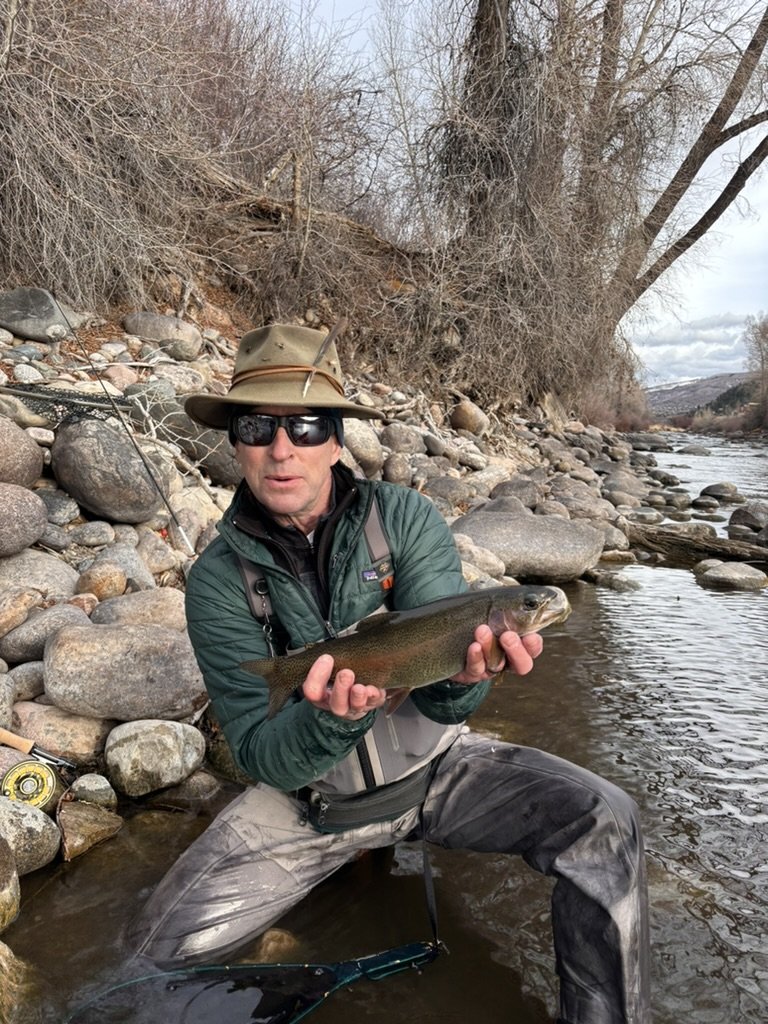
Four trout species share this water: rainbow, brown, brook, and cutthroat, the cutthroat being Colorado's only native trout. The larger rivers also hold mountain whitefish. On Gore Creek, anglers occasionally pull off a "grand slam," landing all four trout species in a single day. Most fish run a healthy 12 to 18 inches, with bigger browns and rainbows holding in the deep runs and along the undercut banks, especially down low near the Colorado confluence. The Eagle's freestone character produces legendary caddis hatches in late spring that bring fish up to the surface and make for unforgettable dry-fly days.
The Top Four Guides in the Valley
You can wade plenty of public water on your own, but a good guide is the shortcut to the best runs and the right flies. These four outfitters know this water as well as anyone:
Colorado River Outfitters is Edwards-based and the 2025 Best of Vail Valley winner for fly fishing, and it's the one I send people to first. As the largest permit holder in the region, they run guided float trips, walk-and-wade outings, and multi-day overnight floats across the Eagle, Colorado, Roaring Fork, Frying Pan, and Yampa, with a deep guide team that fits the water to your group, whether it's your first cast or your hundredth.
Vail Valley Anglers, based in Edwards on the banks of the Eagle, is one of the valley's flagship shops, with wade and float trips across the Eagle, Colorado, and Roaring Fork plus a full fly shop and lessons.
Minturn Anglers has been a Minturn institution since 2008, guiding the Eagle, Upper Colorado, Roaring Fork, and Blue rivers, with some of the most detailed local river reports you'll find.
Colorado Angling Company is a guide-owned shop in Wolcott with its own private stretch of trout water and an on-site cabin, running float and wade trips on the Eagle, Colorado, and Roaring Fork. A "Best of Vail" winner with access to roughly 200 miles of fishable water within 90 minutes.
Spring, Carve and Cast
Here's the trick locals love and visitors rarely expect: in spring you can do both in one day. The skiing stays excellent into April, and by then the lower rivers are coming alive. So you ski powder runs off the lifts in the morning, then trade boots for waders and fish nymphs and egg patterns to voraciously hungry trout in the afternoon. The dry-fly hatches don't really start until late March or April; through the winter it's all subsurface, and the fishing is phenomenal. Gore Creek runs directly below Vail's lifts, which makes it the most convenient ski-and-fish water in the state; you barely have to move the car. It's the kind of day that sounds made up until you've actually had one, and it captures why people fall for this valley in the first place.
Check the Flows Before You Go
Freestone rivers like the Eagle live and die by their flows, especially through spring runoff, so it pays to check conditions before you head out. A local resource I point people to is the Colorado Headwaters Report, a real-time dashboard tracking river flows, temperature, and clarity across our local watersheds, exactly the information you want when you're deciding whether it's a wade day on Gore Creek or a float on the Colorado.
What It Means for Your Home Here
When I'm helping buyers, river access comes up more than almost anything else outside of skiing. Homes along Gore Creek, the Eagle, and the riverfront stretches of Edwards and Avon carry a real premium for a reason: walking out your door to Gold Medal water is a rare thing to own. Even when a property isn't on the river, I pay attention to how easy it is to reach a favorite run, a public access point, or a quiet stretch of bank. If fishing is part of the life you're picturing here, build it into your search, and I'm always glad to talk through which neighborhoods put you closest to the water.
Plan your day: Colorado Headwaters Report: live river flows · Colorado Gold Medal Waters map
Frequently Asked Questions
Where is the best fly fishing near Vail, Colorado?
The valley sits on a remarkable run of trout water. Gore Creek flows right through Vail with a roughly six-mile Gold Medal stretch, the Eagle River runs Gold Medal from Vail down to its confluence with the Colorado, and within about an hour you can reach the Upper Colorado and the Roaring Fork, the longest continuous stretch of Gold Medal water in the state.
What is Gold Medal Water in Colorado?
Gold Medal is Colorado Parks & Wildlife's top designation for trout streams and lakes, reserved for waters that produce a high number of large trout and offer exceptional angling. Only a small fraction of the state's rivers qualify, and several of them are within easy reach of the Vail Valley.
Are the rivers around Vail catch-and-release?
The premier stretches are managed for it. Gore Creek's Gold Medal water is artificial flies and lures only and fishes effectively as catch-and-release, and the Roaring Fork's Gold Medal section between Basalt and Carbondale carries flies-and-lures-only rules with a strict slot limit. Practicing catch-and-release across the valley keeps the wild fishery healthy.
What kinds of trout can you catch in the Eagle River Valley?
Rainbow, brown, brook, and cutthroat trout all live here, plus mountain whitefish in the larger rivers. On Gore Creek it's possible to land all four trout species in a single outing, a 'grand slam.' Most fish run 12 to 18 inches, with bigger trout holding in the deeper runs.
Can you ski and fish on the same day near Vail?
Yes, and it's one of the most 'Colorado' things you can do. In spring, anglers ski powder runs in the morning and fish nymphs and egg patterns to hungry trout on Gore Creek or the Eagle in the afternoon (the dry-fly hatches don't really begin until late March or April). The water runs right below the lifts, so the ski-and-fish doubleheader takes almost no extra driving.
Do I need a guide to fly fish the Vail Valley?
Not for public-access wade fishing if you're experienced, but a guide is the fastest way to learn the water, read the hatches, and reach the best runs, especially on a float trip. The valley has several excellent outfitters offering half-day and full-day guided trips for every skill level.